Acoustic Ceiling, Recording Studio, Heaton Mersey
Rain on an uninsulated metal roof was loud enough to stop a take. Fixing that took a barrier ceiling, not acoustic tiles.
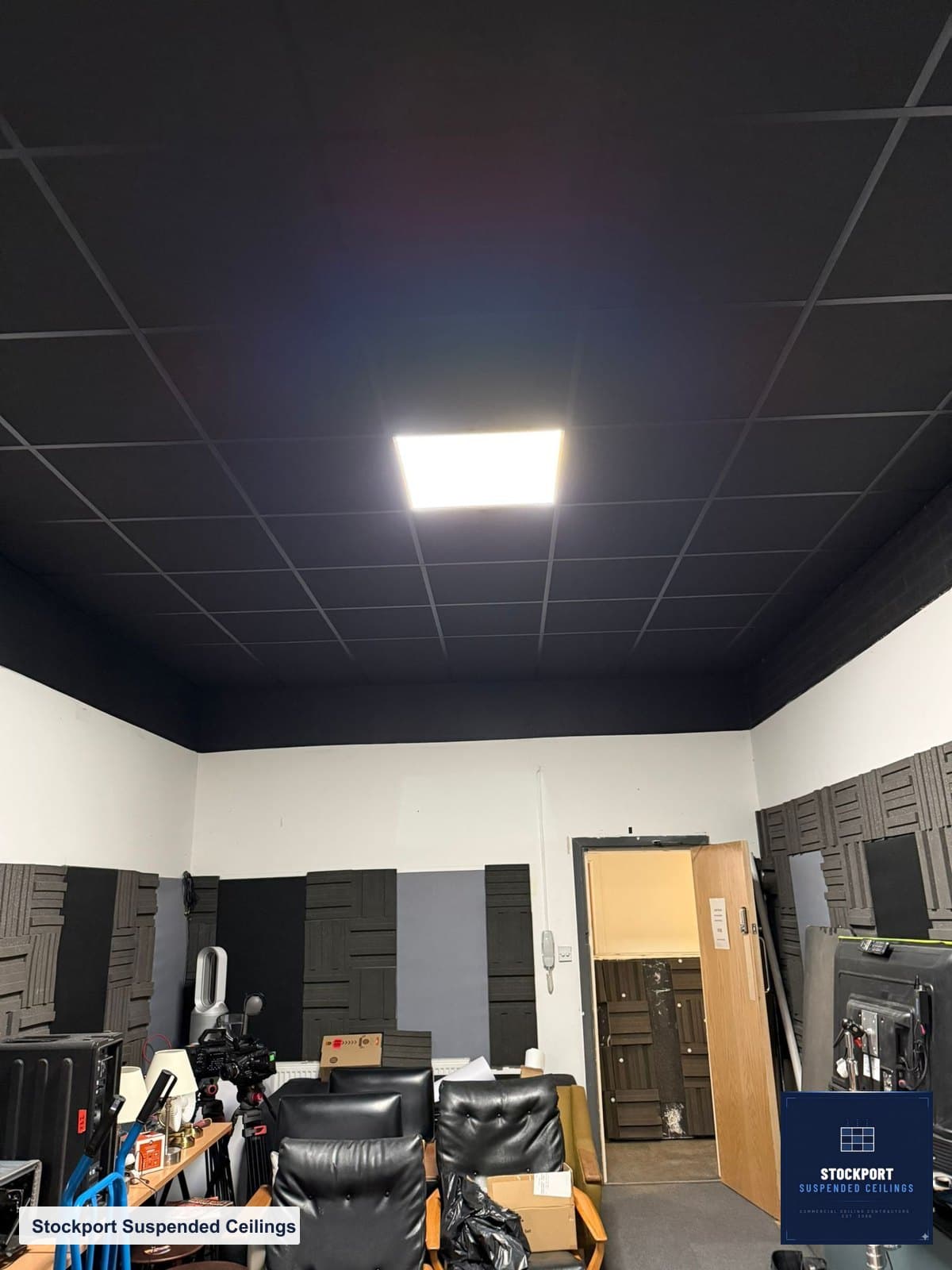
Stockport Suspended Ceilings installed a barrier-build acoustic ceiling in a recording and podcast studio in Heaton Mersey, Stockport. The studio sat under an uninsulated metal roof and rain was loud enough to stop a take. Absorbent acoustic tiles on their own would not have fixed it, because absorption deadens noise made inside a room and does nothing to block noise coming through from above. The ceiling was built for mass and separation instead: long hangers holding the ceiling clear of the drumming roof deck, an absorbent tile carrying the room acoustics, a mass barrier layer with an acoustic pad over the top doing the blocking, and every service penetration sealed as it was formed. Finished in black grid and black tile with the LED panel set into the grid line, so it reads as a flat dark plane on camera. Call 0161 524 9076.
The problem
The studio was a working recording and podcast space in Heaton Mersey with acoustic treatment already on the walls. The room sounded fine. The problem was everything arriving from outside it. Under an uninsulated metal deck roof, heavy rain was loud enough to stop a take, which for a studio is not a comfort issue, it is lost billable time.
This is the single most misunderstood job in ceiling work. Rain on a metal roof is loud because the roof is a big, thin, light drum. The sound is not leaking in through a gap, the whole roof is being played like an instrument. Sealing round the edges does nothing on its own, and neither does a better acoustic tile.
Deadening a room and blocking noise coming through from above are two different jobs. Most acoustic ceiling quotes price the first and get asked to solve the second.
What we built
A barrier ceiling works on mass and separation, not absorption. Mass to stop the sound passing through, and separation so the ceiling is not rigidly coupled to the structure doing the drumming. Absorption still has a job to do for the room itself, but it is the third ingredient, not the first.
In practice that meant hangers dropped long to hold the ceiling clear of the roof deck, an absorbent tile carrying the room acoustics, and a mass barrier layer with an acoustic pad laid over the top doing the blocking. That build weighs several times what a standard tile weighs, so the grid and the hanger centres had to be specified to carry it from the outset. You cannot arrive at it by upgrading the tiles in an existing ceiling.
Then every penetration was sealed as it was formed. This is the stage that quietly ruins barrier ceilings. Sound goes through gaps, so a heavy, correctly built ceiling left open around a downlight or a cable run has a hole straight through the barrier.
The project in pictures
The work, stage by stage
Survey: find out what is actually making the noise
The complaint was rain, but the cause was the roof build-up, not a gap. An uninsulated metal deck over a room with a shallow void behaves like a drum skin, and no amount of sealing round the edges changes that. The survey is where a barrier job gets separated from an absorption job, and getting that wrong is what makes acoustic ceilings fail.
Set out and hang
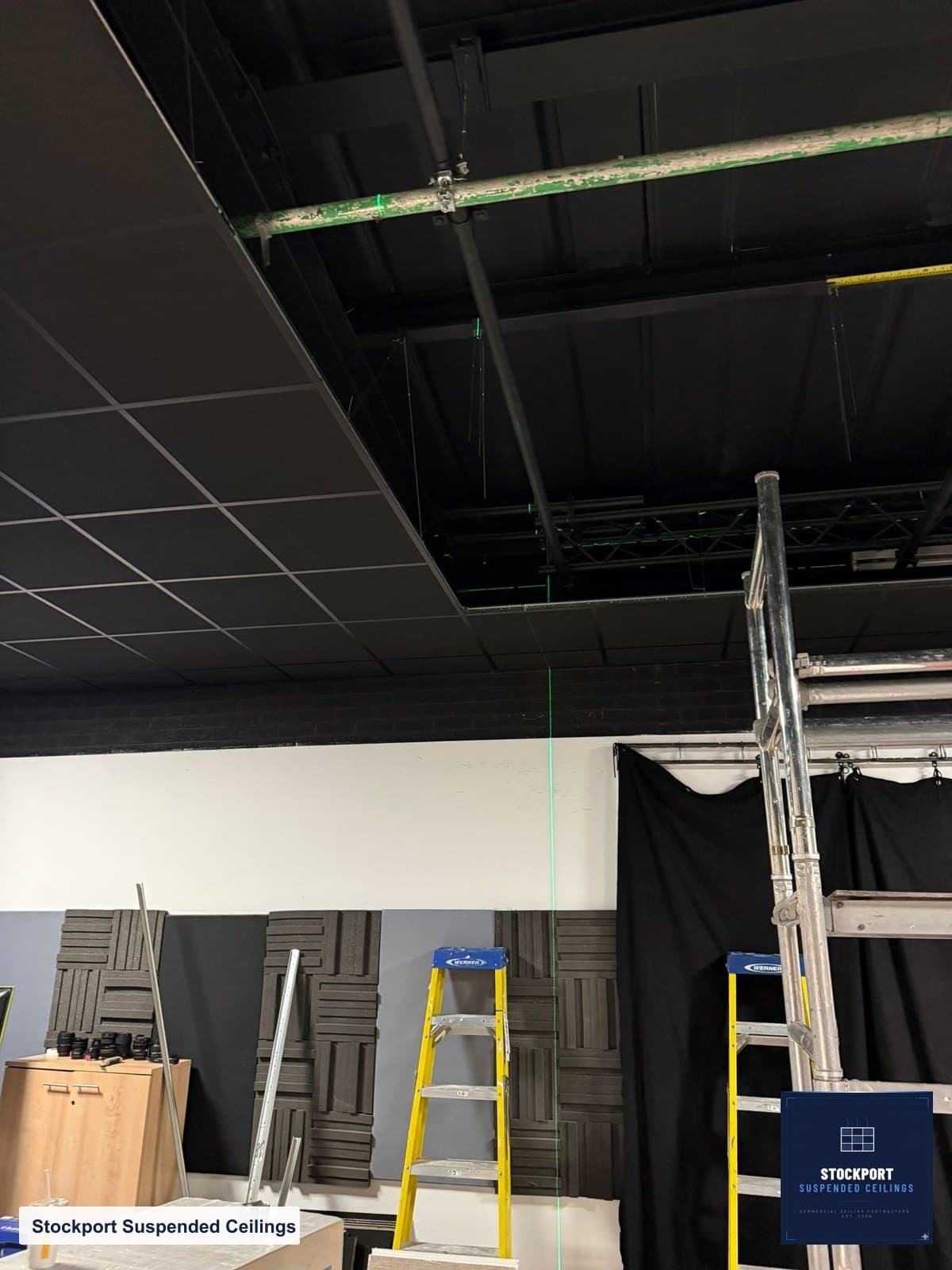
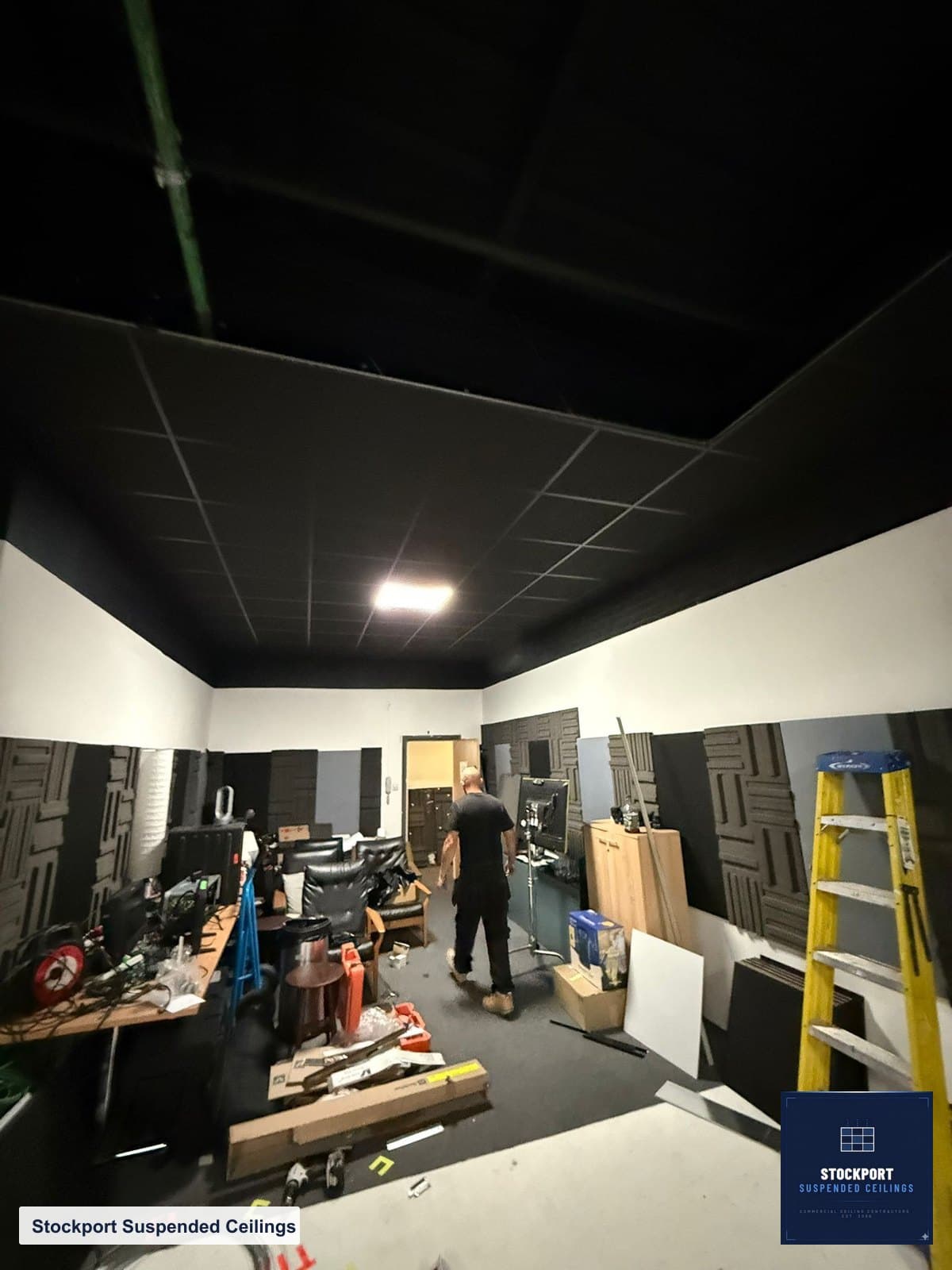
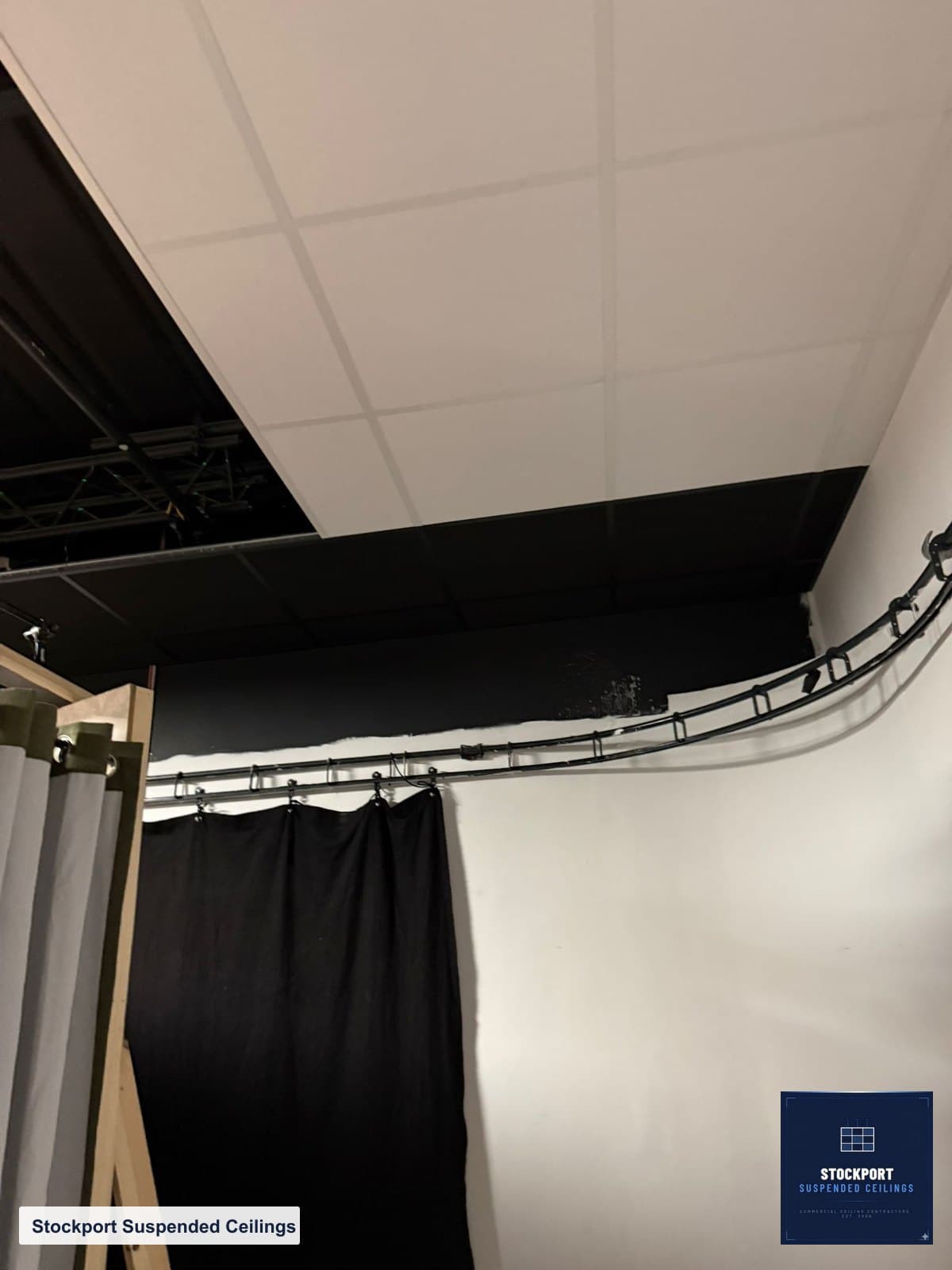
Grid line set out with a laser and the hangers dropped long, so the ceiling sits well clear of the structure above. Separation matters as much as mass here. A ceiling fixed tight to a drumming roof transmits the drumming, however heavy the tiles are.
Build the barrier
An absorbent tile carries the room acoustics, and a mass barrier layer with an acoustic pad laid over the top does the blocking. That build is several times the weight of a standard tile, so the hanger centres and the grid have to be specified to carry it. This is the part that a standard acoustic quote does not include.
Seal every penetration
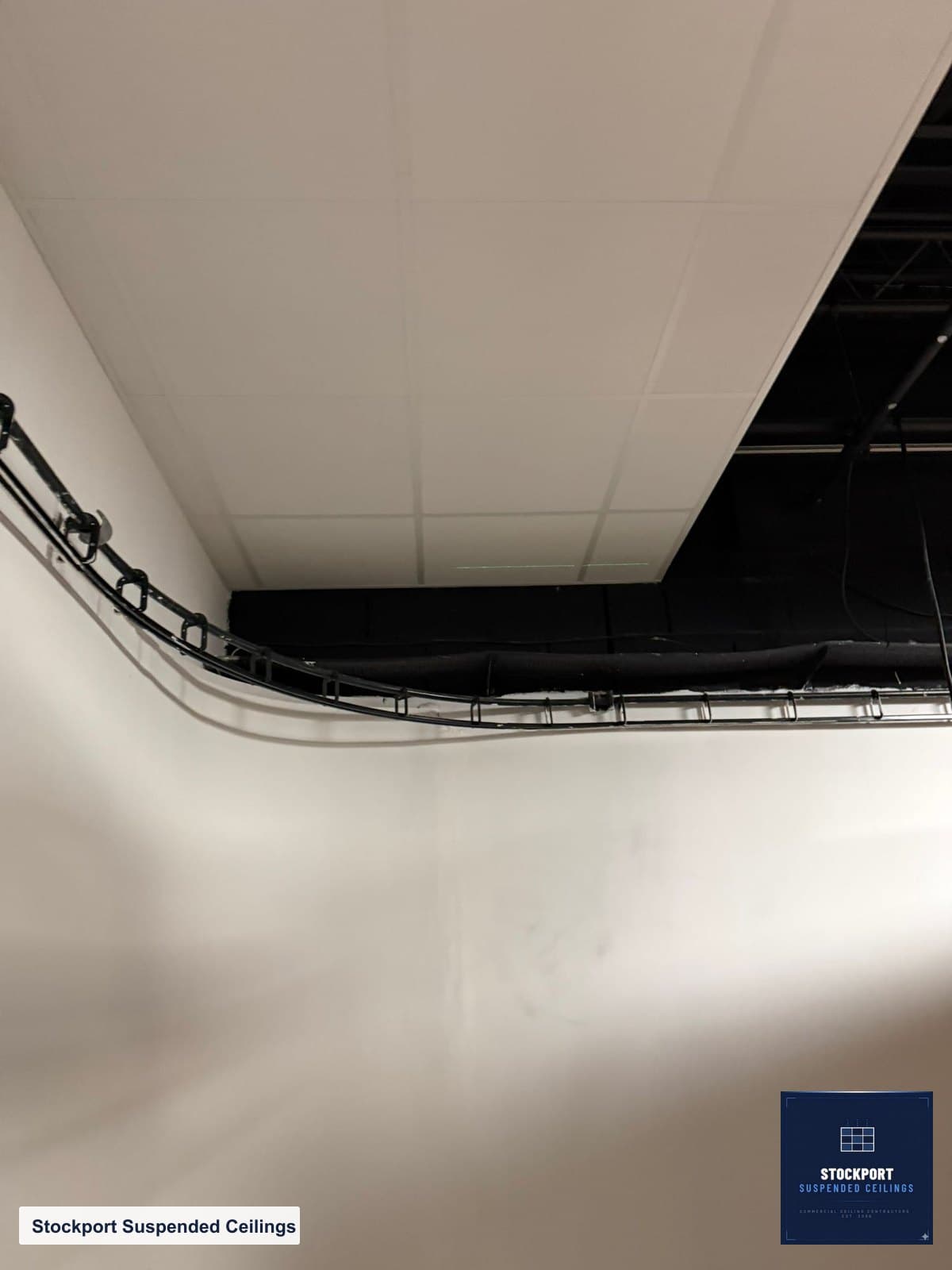
Lighting, cabling and any service coming through the ceiling sealed as it was formed. A barrier with an open hole in it is not a barrier, and this is the stage most commonly skipped.
Black grid, finished for camera
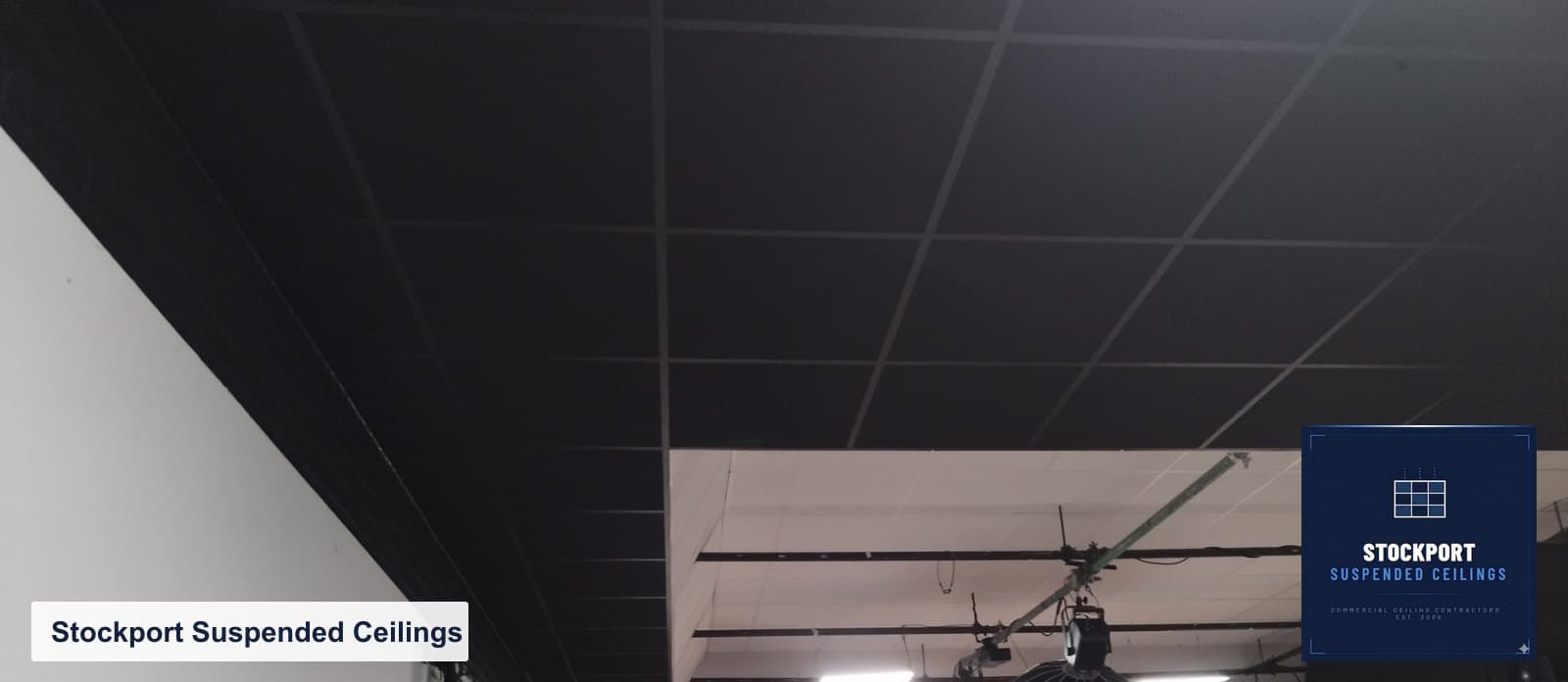
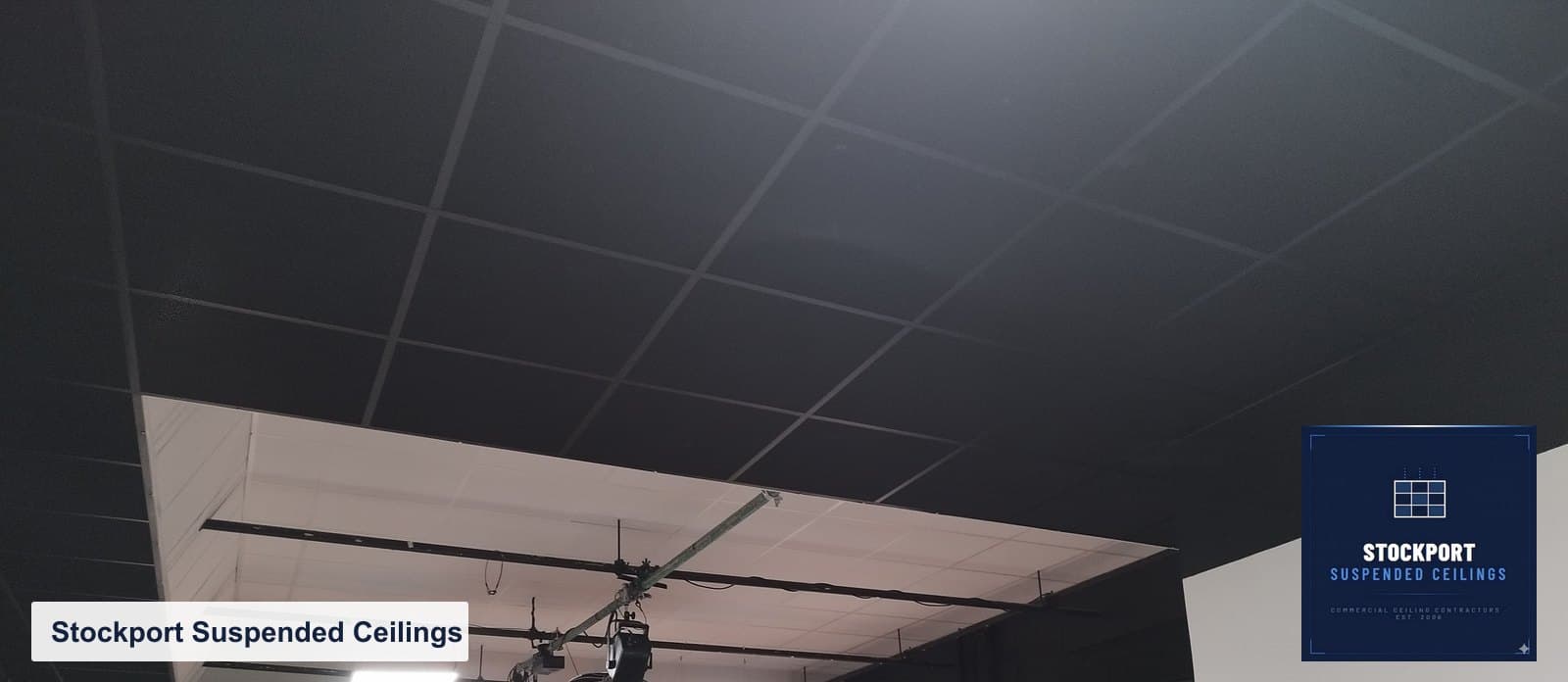
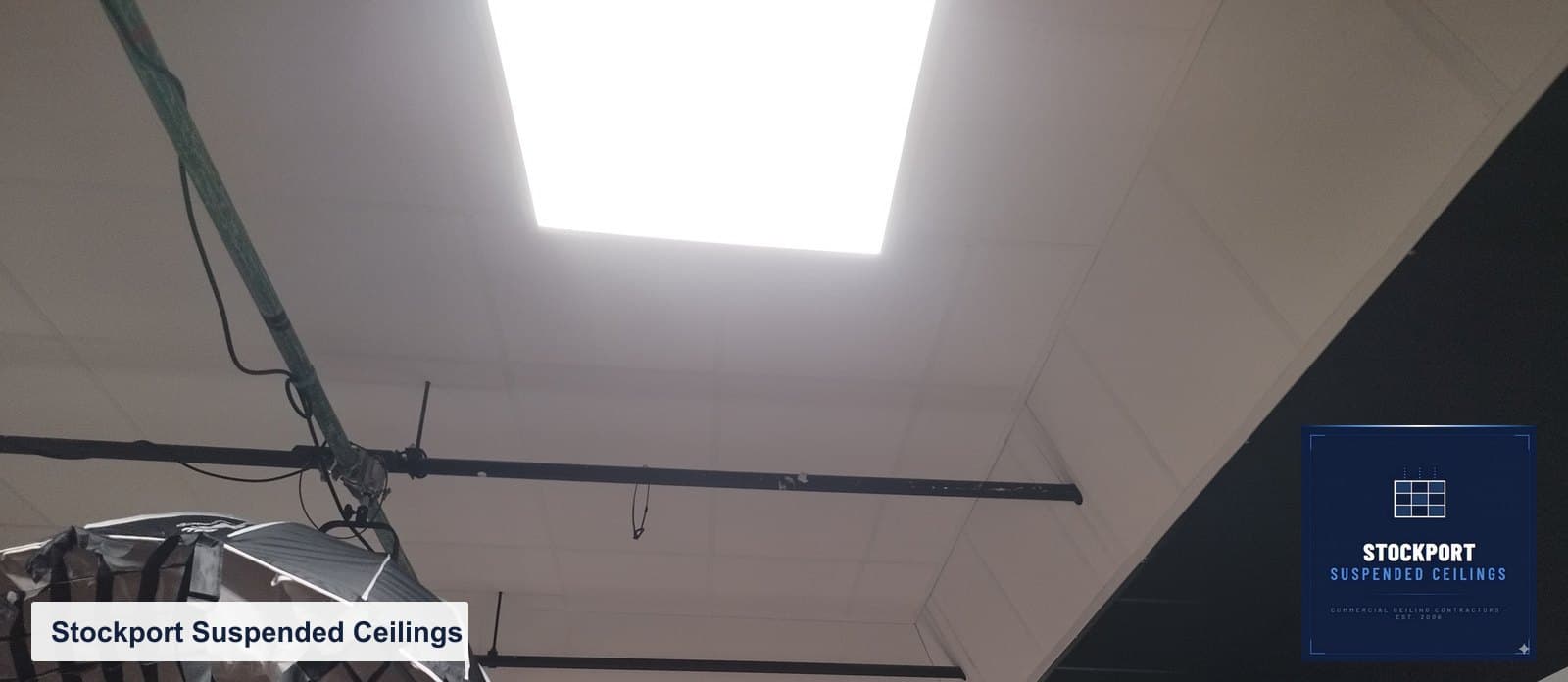
Black grid and black acoustic tiles throughout with the LED panel set into the grid line, so the ceiling reads as a flat dark plane on camera rather than a lit surface above the set.
If you have this problem
It is the same problem, and the same answer, in a warehouse with a metal deck roof, an office extension under a flat roof, a classroom under a lightweight roof and a restaurant with a flat above it. If the noise is coming from above or from next door, you need mass and separation, not a better tile.
One honest caveat. Rooms in the same building can behave completely differently depending on the roof build-up and the depth of the void above them. It is worth checking a neighbouring room before anybody specifies anything expensive, because sometimes the answer is far simpler and cheaper than it looks.
More on the systems and the ranges: our acoustic ceilings page, the acoustic ceiling cost per m² guide and the guide to acoustic ceilings in open plan offices.
About the author
Written by Paul Grieveson, commercial suspended ceiling installer with experience since 2006 across the UK and Ireland. Based in Bredbury, Stockport. Ceiling installation work completed at Selfridges, Primark, Debenhams, Waitrose, Tesco, Sainsbury's, Argos, TK Maxx, Molton Brown, Sports Direct, Moss Bros, EE, Thomas Sabo, White Stuff, Wasabi, Paul's Patisseries London, Manchester Eye Hospital, Walsall Hospital, Bristol Hospital, Aquinas College Stockport, WHSmith at Heathrow and The Perfectionist's Cafe at Heathrow. Snag-free workmanship guaranteed on every job.
Get an Instant Estimate
Answer 5 quick questions and get a ballpark figure in under 2 minutes. No sign up required.
Get Instant Estimate →Ready to hire? See our suspended ceiling contractors & installers or commercial suspended ceilings in Stockport.
Frequently Asked Questions
- Can a suspended ceiling stop rain noise from a metal roof?
- Usually yes, but not with absorbent tiles alone. Rain on a metal roof is loud because the roof is a large, thin, light drum, so the whole surface is radiating sound into the room. What works is mass and separation: a barrier layer built into the ceiling, absorption in the void above it, and a deep void with long hangers so the ceiling is not rigidly coupled to the structure that is drumming.
- What is the difference between an absorbent ceiling and a barrier ceiling?
- An absorbent ceiling deadens noise made inside the room, which is what most acoustic tiles are sold to do. A barrier ceiling blocks noise coming through from above or next door, which needs mass rather than absorption. They are two different jobs at two very different prices, and specifying the first when you need the second is the most common and most expensive mistake in acoustic ceiling work.
- Why was the grid and tile black?
- Studios are usually finished dark so the ceiling does not throw light back into camera or draw the eye above the set. We installed a black grid with black acoustic tiles and set the recessed LED panel into the grid line, so the ceiling reads as a flat dark plane on camera rather than a lit surface.
- Does every penetration really need sealing?
- Yes, and this is where barrier ceilings are usually lost. Sound goes through gaps. A ceiling built with the right mass and then left open around a downlight, a speaker cable or a duct has a hole straight through the barrier, and the performance drops away far faster than people expect. Every penetration on this ceiling was sealed as it was formed, not afterwards.
- How much does an acoustic ceiling like this cost?
- A straightforward absorbent acoustic ceiling and a full barrier build sit at opposite ends of a wide range, which is why our estimate tool deliberately quotes acoustic work as a broad band rather than a single figure. See our acoustic ceiling cost per m2 guide for the ranges, then book a free survey. On this kind of job the survey is what produces a real number, because the roof build-up above the room decides the specification.
- Do you install acoustic ceilings in studios across Greater Manchester?
- Yes. Stockport Suspended Ceilings installs acoustic and barrier ceilings across Stockport, Manchester and the wider Greater Manchester area, in studios, offices, restaurants, gyms and schools. Call 0161 524 9076 for a free virtual survey within 48 hours.
Noise coming through the ceiling?
Call 0161 524 9076 or request a survey online. Tell us what the noise is and where it comes from, and we will tell you honestly whether it needs a barrier build or something simpler.